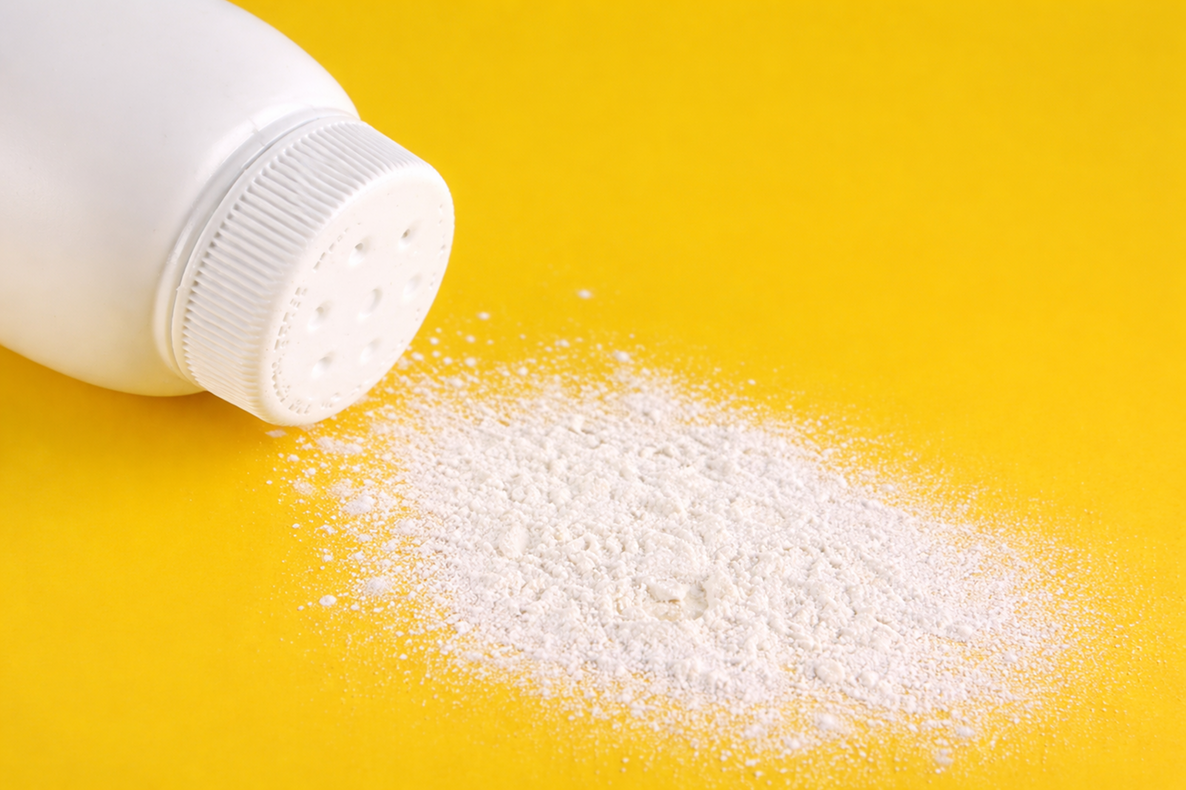
A look at the scientific evidence linking asbestos-contaminated talc to ovarian cancer and mesothelioma, and how recent revelations — including a landmark Lancet retraction — have reshaped the debate.
Why Talc and Asbestos Occur Together
Talc and asbestos are both naturally occurring silicate minerals that form in similar geological conditions. Their deposits often overlap geographically, creating the potential for co-occurrence in mining sites. Tremolite, a form of asbestos, is frequently found alongside talc deposits. When mining and processing operations fail to adequately separate these minerals, talc products can become contaminated with asbestos fibres. The World Health Organization and the International Agency for Research on Cancer (IARC) classify asbestos as a Group 1 carcinogen — a substance with sufficient evidence of carcinogenicity to humans.
Mesothelioma — The Signature Asbestos Disease
Mesothelioma is a rare and aggressive cancer that is almost exclusively caused by asbestos exposure. The disease affects the protective lining (mesothelium) surrounding the lungs, abdomen, or heart. One of the most challenging aspects of mesothelioma is its latency period — the time between initial asbestos exposure and disease diagnosis can span 20 to 50 years. This means individuals exposed decades ago may only now be developing symptoms. Crucially, even trace amounts of asbestos exposure can prove significant; there is no established safe threshold for asbestos exposure. In December 2025, a Maryland woman diagnosed with mesothelioma linked to Johnson & Johnson talc products was awarded $1.5 billion in a landmark verdict, underscoring the seriousness with which courts now treat these cases.
Ovarian Cancer and Genital Talc Use
The potential link between genital talc use and ovarian cancer has been examined in multiple epidemiological studies since the 1970s. Meta-analyses of these studies have reported statistically significant associations between talc use on the genitals and epithelial ovarian cancer. Researchers have proposed several mechanisms for how this connection might work. One hypothesis involves chronic inflammation: talc particles may reach the ovaries via the reproductive tract, triggering prolonged inflammatory responses that can lead to malignant transformation. Another focuses on asbestos-specific carcinogenicity: if the talc product is contaminated with asbestos fibres, those fibres may exert a direct carcinogenic effect on ovarian tissue. The strength of epidemiological evidence and the biological plausibility of these mechanisms have convinced courts worldwide to award billions of dollars in damages to talcum powder claimants suffering from ovarian cancer.
The Lancet Retraction — A Turning Point
In March 2026, the world's leading medical journal The Lancet retracted a 1977 unsigned commentary that had argued against mandatory asbestos testing in cosmetic talc. Investigation revealed that the commentary was authored by Francis J C Roe, a consultant paid by Johnson & Johnson — a relationship that was not disclosed at the time of publication. More troublingly, Roe provided J&J with an advance copy of his piece and incorporated the company's editorial suggestions into the final version. This paper was cited for decades as scientific evidence supporting the safety of cosmetic talc, helping shape regulatory and public perception. The retraction came to light thanks to historians David Rosner and Gerald Markowitz, who uncovered the undisclosed conflict of interest through litigation disclosure documents. This episode demonstrates how industry influence and undisclosed financial relationships can distort the scientific narrative, and how the full truth may only emerge through rigorous historical investigation and legal discovery processes.
What This Means for Claimants
The scientific evidence is at the heart of every talcum powder claim. Expert witnesses play a critical role in assessing two key questions: first, general causation — whether the substance in question (asbestos-contaminated talc) can cause the specific disease claimed; and second, specific causation — whether the defendant's product actually caused the disease in that particular individual. The retraction of the fraudulent 1977 Lancet commentary strengthens claimants' position by removing a piece of industry-influenced pseudo-authority from the scientific record. At Jones Whyte Lawyers, we instruct experienced medical and scientific experts for our group action cases, ensuring that claimants' claims are supported by the best available evidence.
For personalised guidance on how the science may affect a potential claim, contact our team.